Some colors are not applied—they are slowly fired into being by time. One of the most captivating qualities of ceramics lies in the unpredictability of glaze. Unlike paint on a flat surface, which can be placed exactly where intended, or printed colors that can be replicated with precision, glaze resists complete control.
Once clay enters the kiln, the act of creation is no longer guided by the artisan alone. Fire, temperature, air, and countless subtle conditions begin to take part. The same glaze, applied to different pieces and fired under slightly different circumstances, will emerge with variations in depth, flow, and layering. These are not flaws—they are brushstrokes left by nature itself.
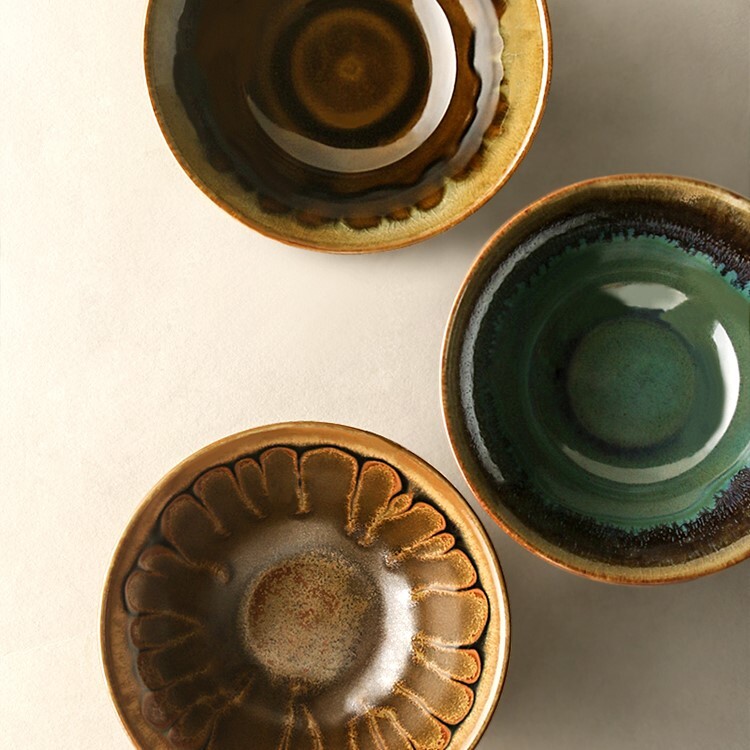
[Product Recommendation] JOTO Japanese Handcrafted Vintage Rustic Bowl_CJR0486
We often assume that color is the result of deliberate choice—as if selecting a particular shade of blue, white, or brown guarantees a predictable outcome. But ceramics do not work this way. Glaze is never static. It melts, flows, and transforms under high heat, then quietly settles as it cools.
Even a seemingly identical glaze can shift depending on its position in the kiln, or deepen unexpectedly if exposed to heat for just a little longer. This is what makes ceramics so compelling. It is not a craft defined solely by control, but one that requires collaboration with nature. The artisan provides direction—nature completes the final stroke.
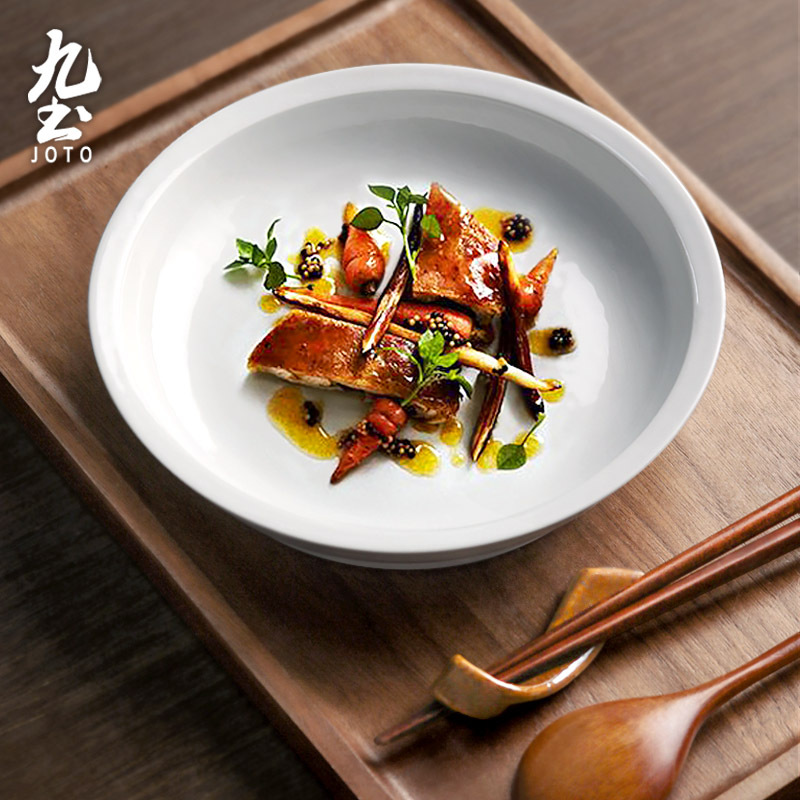
[Product Recommendation] JOTO Japanese Handcrafted Ceramic Plate_CJR0487
For this reason, every glaze is not merely a color, but a record of a process. The variations we see—gradients, transitions, edges, and flows—are not decorative accidents. They are traces of where the fire traveled, where heat lingered, and how a particular firing unfolded at a specific moment.
Sometimes they resemble morning mist, sometimes the surface of water, sometimes the textures revealed in stone over time. What draws us in is not simply that “the color is beautiful,” but that within it lies a sense of movement—an unfinished quality that invites us to look longer, to feel more deeply.
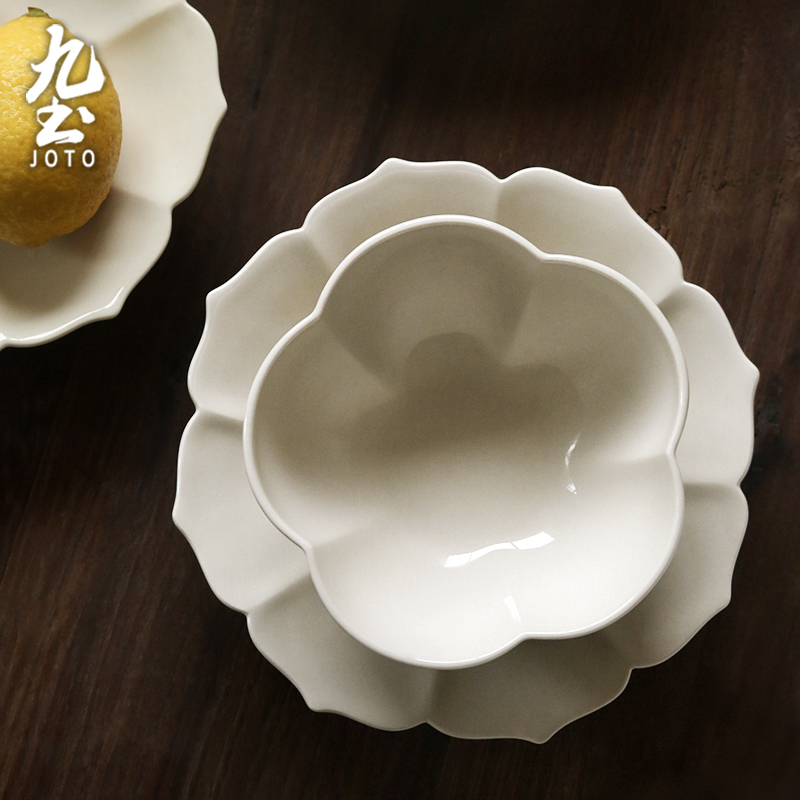
[Product Recommendation] JOTO Japanese Handcrafted Vintage Petal Ceramic Bowl & Plate_CJR0488
This beauty of glaze also reshapes our understanding of uniqueness. Uniqueness is not only found in the slight variations of form, but within every layer of glaze. Even when created from the same formula, technique, and firing logic, each kiln opening reveals results that belong only to that moment.
Nature does not repeat itself, and fire never truly follows the same path twice. A glaze that appears soft and calm in one light may reveal unexpected movement from another angle. A darker edge may be the mark left behind by heat and gravity working together. Each glaze becomes a signature jointly written by the conditions of the world—a presence that cannot be fully designed, and therefore becomes all the more moving.
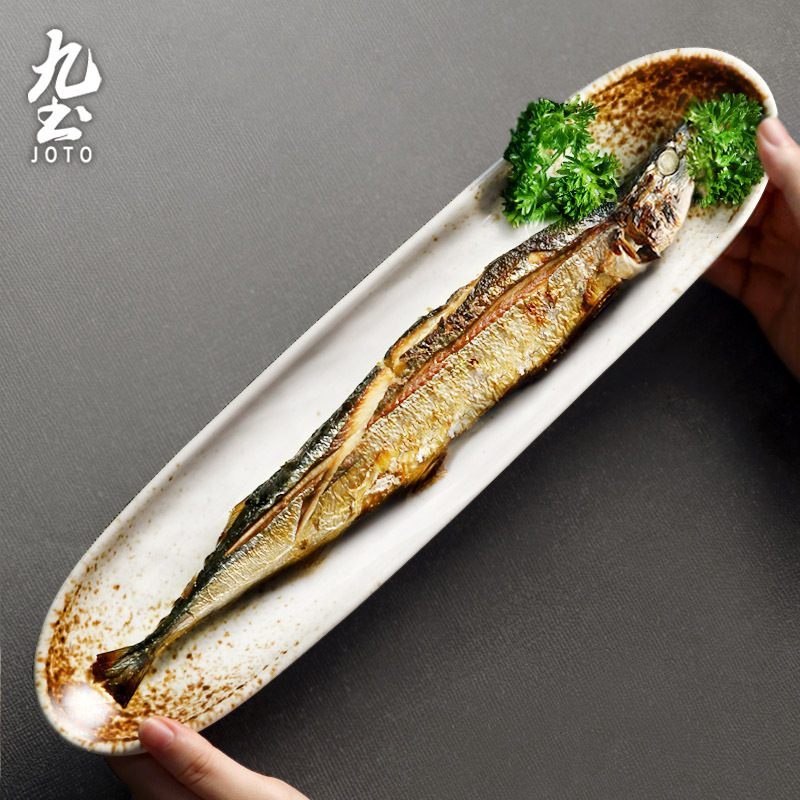
[Product Recommendation] JOTO Japanese Handcrafted Ceramic Sushi Plate_CJR0489
So when we say that every glaze is painted by nature, what we truly mean is that the beauty of ceramics does not belong solely to human skill. It also belongs to the humility of allowing nature to take part in the final creation.
The artisan understands the character of clay, the potential of glaze, and the temperament of fire. Yet even with this knowledge, each firing still requires waiting for the final revelation. It is precisely this waiting that makes every finished color so precious.
These surfaces are not printed or duplicated. They are born at a specific angle, under a specific temperature, at a specific moment in time. Each one is a color only nature could paint—and that is why every piece remains irreplaceable.
Looking for more products? Visit our official website:https://www.jotomall.com/


