Imagine two equally capable people walking into an interview room. One sits down naturally, knows when it is appropriate to make a joke, is comfortable pausing before answering a question, and does not mind making small talk with the manager. The other carefully weighs every sentence, sits with their back perfectly straight, and worries about saying the wrong thing. In the end, the first person might be described as “confident, composed, and full of potential,” while the second is seen as too nervous or lacking presence. We tend to understand these differences in terms of personality: some people are naturally confident, while others are simply more timid. Sociology, however, asks us to go one step further: why is the person who appears at ease able to feel so at ease? Perhaps what they possess is not merely a stronger inner sense of self, but a body that already knows how to move through this particular world.
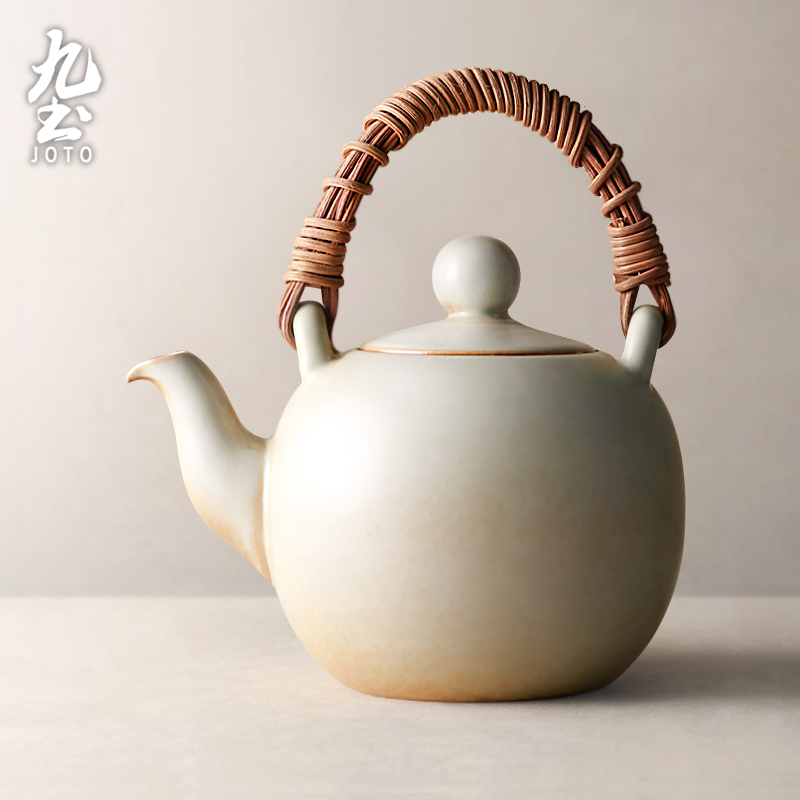
【Product Recommendation】JOTO Japanese-Style Heat-Resistant Clay Teapot_CHR0630
Pierre Bourdieu uses the concept of “habitus” to describe this phenomenon. Growing up in different families, schools, and social environments, people gradually acquire a set of dispositions they can draw on without consciously thinking about them: how to speak, how to eat, whether to move closer to or keep one’s distance from authority, when it is appropriate to speak, what kinds of jokes one can respond to, and even what clothes are considered suitable for a particular occasion. As these experiences accumulate, they become something like muscle memory for navigating the social world. When a person’s habitus happens to align with the field they are entering, they rarely need to stop and guess the rules, so their movements naturally appear relaxed and assured. By contrast, someone entering an unfamiliar class environment for the first time may have to monitor their accent, vocabulary, clothing, and gestures even while carrying on a conversation. The two people may not differ greatly in psychological resilience, but their bodies are performing very different amounts of work.

【Product Recommendation】JOTO Heat-Resistant Glass Teapot_CHR0631
In their research on elite professions in Britain, Sam Friedman and Daniel Laurison observe precisely this kind of inequality. Certain professions, including accounting and media, place considerable value on a difficult-to-define sense of “fitting in” that rarely appears in a formal job description: speaking naturally, knowing how to interact with clients, dressing appropriately, and understanding when to be formal and when to appear relaxed. People from more privileged families have often grown up around similar linguistic and social codes, making it easier for them to appear effortless when they enter these environments. What deserves closer attention is how managers may interpret this familiarity as talent, ease as confidence, and confidence as leadership potential. A person’s class history then disappears from view, leaving behind only an apparently neutral assessment: “They just have the right kind of presence.”
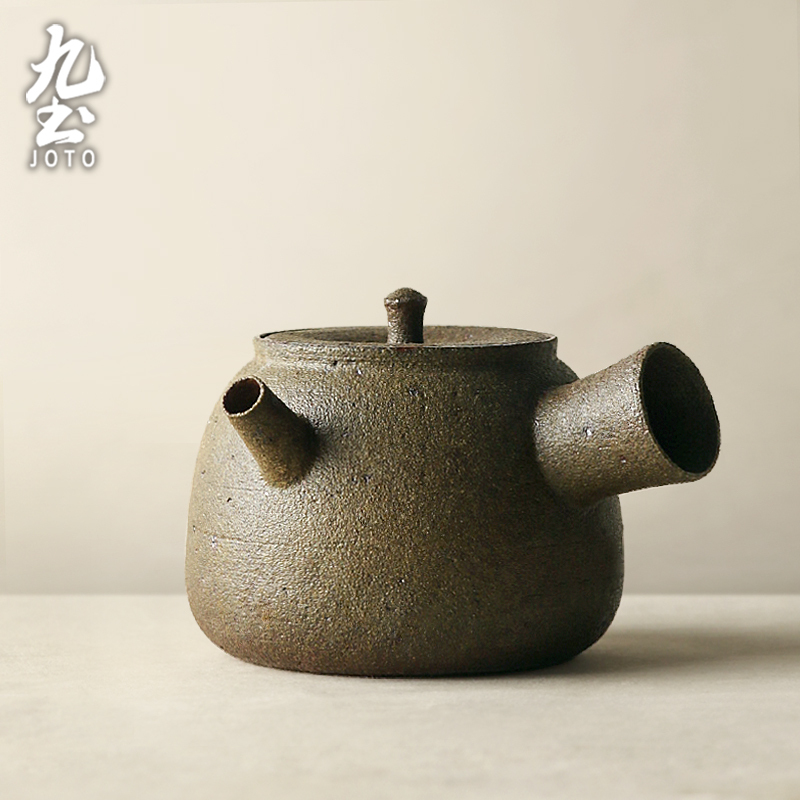
【Product Recommendation】JOTO Handmade Coarse Pottery Kiln-Changed Small Teapot_CHR0634
Research on what is often called “cultural matching” in hiring pushes this question even further. Interviewers may be assessing more than whether you can actually perform the job; their judgment can also be shaped by something as simple as how comfortable it feels to interact with you. When two people enjoy similar sports, have traveled to similar places, or understand the same kinds of jokes, conversation tends to flow more easily—and that conversational ease can then be interpreted as compatibility. Of course, this mechanism exists far beyond the workplace. At gatherings with friends, on dates, over dinner, or even when walking into a particular restaurant for the first time, we can often sense whether we need to make an extra effort simply to “act normal.” Class, gender, and racialized social positions shape the kinds of practice people receive while growing up, as well as how others interpret the very same behavior. Speaking loudly may make one person seem assertive while another is judged as overbearing. Being casual may make one person appear easygoing while another is seen as lacking manners.

【Product Recommendation】JOTO Handmade Embossed Striped Glass Water Pitcher_CHR0635
Seen this way, confidence can no longer be understood solely as a psychological matter of learning to stand tall, smile, and believe in yourself. People can certainly practice expressing themselves and gradually develop greater trust in their own abilities. Sociology simply reminds us that before telling everyone to “be more confident,” we should also look at whom the room was designed for. Who grew up already speaking its language? Whose clothing, accent, and interests are treated as normal? And who has to learn an entirely different set of rules before they are allowed to appear effortless? Perhaps the person standing outside the door, working hard to look composed, is not the only one who needs to change. When a society repeatedly turns the experiences of particular groups into the standard script, confidence can easily become the shadow cast by privilege. Once we understand this, we can ask the question differently: should a fair world require everyone to learn how to adapt to the same room, or should it make room for more kinds of bodies to sit comfortably within it?
Want to see more products? Visit the JOTO official website.


